
Government-subsidized preschools, 480 days paid maternity leave, neighborhood rec centers, ample recess, forest kindergartens, drop-in after school programs (aka fritids), outdoor classrooms, public access to private lands, and open-air napping. These are just some of the perks of raising kids in Scandinavia, where friluftsliv, the Swedish term for living close to nature, isn’t just a parenting strategy, it’s a way of life.
“Friluftsliv can encompass anything from hiking to berry picking and fishing or be as simple as going for a nature walk or bike ride near one’s home,” writes Linda Åkeson McGurk in her new book, There’s No Such Thing as Bad Weather: A Scandinavian Mom’s Secrets for Raising Healthy, Resilient, and Confident Kids. Friluftsliv isn’t competitive; it’s simply a chance to get outside and enjoy nature—winter or summer, day or night, rain or shine, mud, sleet, or snow.
“It would be very easy to make excuses for not going outside,” writes McGurk, who was born and raised in Sweden and moved to the United States after graduating from journalism school. For much of the year, the days are notoriously cold, wet, and dark, but the climate doesn’t dampen the Swedes’ fervent enthusiasm for friluftsliv. If anything, it stokes it. With an abundance of forests and wild places, even in urban Stockholm (40 percent of the city is public open space), Scandinavian children enjoy more unstructured outdoor playtime—the average preschooler in Stockholm spends six hours outside each day in good weather and an impressive 90 minutes in winter—and a healthier balance between screen time and green time.
Last year, McGurk and her two daughters, ages six and nine, experienced the discrepancies between the car-centric United States and nature–obsessed Scandinavia when they moved back to Sweden for six months to help her ailing father. It was there that she became determined to spread the gospel of friluftsliv to American parents. Reader beware: There’s No Such Thing as Bad Weather may make you want to up and move to Sweden. (Even McGurk is trying to find a way to spend more time there.) For most of us, that’s not realistic. Fortunately, McGurk has plenty of tips for injecting some much-needed friluftsliv into your family and community.
#1. Think Small
“Not all encounters with nature have to be grand,” says McGurk. “Nature is everywhere, not just in the national parks. There are always things to look at, trees shifting color, flowers blooming. It’s all about embracing the little moments in life.” Even feeling the breeze on your face creates a connection with nature that correlates with improved health and greater happiness. Go outside for a walk, collect leaves in the backyard, play in the park, and dig in the dirt.
“Let your kids get dirty as much as possible,” writes McGurk. “Most germs in our environment are completely harmless, and some are even beneficial to our health and well-being.” You don’t have to go far, but it’s important to start early and go often. “Spending time outdoors is one of the few things that a child really needs in the early years, and when you make it part of your everyday life it becomes second nature,” says McGurk.
#2. Be the Squeaky Wheel
“Nature is so integral to our health, but it has to be accessible, and that’s not the case for most communities in the U.S.,” says McGurk, who explains that the idea is slowly catching on, with doctors prescribing nature time for kids with ADHD or who show symptoms associated with a lack of activity. “But there’s lots of work to be done on a city level to grow green spaces and make communities more walkable. It’s not a sexy topic, but so much of our experience of nature can be done by walking or biking,” which is not always the safest thing for kids to do, particularly on crowded streets.
Sometimes progress is as simple as picking up the phone. Last spring, I called my city’s road safety department to ask that a crosswalk be put in at a busy intersection on my daughters’ way to school. There’s no crossing guard, and drivers routinely blow through the four-way stop without looking. I expected my request to die quietly in a bottomless pit of bureaucracy, but two days later, I got a call back from the city, and a week later, thick, white lines appeared on the road. Takeaway: Speak up for your child’s right to safe open spaces, parks, sidewalks, and walking routes. You’ll be doing everyone a favor.
#3. Establish Freedom Zones
Unstructured, unsupervised outdoor play builds resilience, fosters coordination, strengthens sensory awareness, and improves decision-making skills. “When children play in nature they tend to be calm yet alert,” writes McGurk. Encourage kids to venture forth on their own by creating safe parameters where they’re allowed to roam beyond the prying eyes of parents. “If we look at the stats, it really isn’t more dangerous now to let kids play outside,” says McGurk. “The only difference is that we hear more about the horrible incidents.”
Her suggestion: Start by creating an organized nature playgroup “to get to know each other, then hopefully that could branch out to kids playing outside on their own.” Areas with little traffic and lots of other children and built-in “social trust”—a confidence in the integrity and honesty of a community—are especially conducive to free-range parenting. Gradually, the kids’ range will expand as they mature and become more responsible and trustworthy. “Over time you will realize what they can handle. You can’t say at a certain age ‘x’ is appropriate. Every kid is different. Trust your instincts.”
#4. Substitute Nature Play for Structured Sports
Pediatric occupational therapist Angela Hanscom recommends that children get four to five hours of outdoor play every day. “It does seem like an impossible standard to live up to here,” admits McGurk, “but in Sweden it’s much more realistic, with longer recess, shorter school days, and more after-school free play.” Even the U.S. benchmark of one hour of “moderate exercise” daily is beyond the range of many schoolkids in America, nearly one-third of whom are overweight or obese.
Boosting kids’ outdoor time doesn’t have to mean signing them up for organized activities, which can be expensive and require long commutes. “Outdoor play totally counts,” says McGurk. “A study by the University of Copenhagen shows that kids get more exercise from playing freely in nature than they do from competitive sports because they spend less time standing around waiting for the ball.” It can be hard to buck the American obsession of with bigger, faster, younger competitive team sports. You have our permission.
#5. Encourage Risk
The Scandinavians embrace high-consequence activities that involve heights, speed, dangerous tools or elements: climbing trees, swinging from a rope swing, learning how to start a fire or use a saw, or exploring an area where you might become lost. If you’re cringing at that thought, you’re not alone. “Unfortunately the term has a negative connotation,” says McGurk. “We’ve come to think of risk as negative, but it’s not the same thing as hazard, and it’s important to make distinction. Like with anything in life, if you want to learn how to judge risk, you actually have to engage in it, and nature is the best place.” Skinned knees and scraped elbows are par for the course. In Sweden, they call them “summer legs.”
#6. Be Trashy
“Junk playgrounds” are popping up in Denmark and around northern Europe as places for kids to use their imaginations and build things out of scraps. Get creative and open a pop-up in your backyard or school (get permission first) by gathering old building materials, cardboard boxes, sticks, paints, ropes, hay bales, wood (just make sure there are no rusty nails sticking out), crates, spools, tires, or wooden pallets. “Whatever cast-off stuff you can find,” says McGurk, “kids will create from it.” It’s also a great way to foster communication and teamwork. “My kids didn’t know anybody when they first showed up, and after a while they start to work together to construct different things.”
#7. Model Friluftsliv
With shorter recesses and dwindling P.E. time at school, we parents have to pull extra weight. “I just try to compensate at home as best I can,” says McGurk. “If we can get an hour or two in on a workday, that’s awesome. We have a habit of going outside every day. We might not stay out for long, if the weather is, um, challenging. It’s important that the adults project a joy of being outside. That attitude is half the battle.” And sometimes weather is more exciting than clear skies. On the rare soggy mornings here in Santa Fe, my younger daughter collects snails on the walk to school, stuffing her fists with half a dozen and releasing them in the schoolyard before the first bell.
#8. Dress for Success
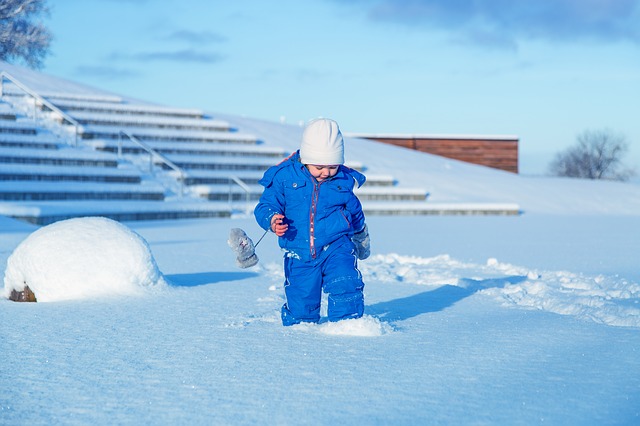
Winter is here, and good gear is key for getting outside every day with the little ones. Besides the obvious of dressing in synthetic, moisture-wicking layers, McGurk has her own strategies. “I’m always wearing snow pants. It’s not that flattering, but if you’re all comfortable, not just the kids, you’ll have more fun and stay outside longer. In winter, even when we don’t have snow, my kids need more motivation to get out. We play games outside, even after dark, like hide-and-seek or flashlight tag or soccer.”
Reframe the way you talk about the weather to bring out the positives, and don’t forget the motivation (aka bribes). “My kids love having a picnic outside, and hot chocolate is a special treat,” says McGurk. If you can, build a fire or a snow fort for extra incentive. The key is to make outdoor time routine, even if it’s just for half an hour. “My kids come to expect it, and they don’t really fight it anymore. And after we’ve been out, it’s always nice to come in from the cold.”
#9. Spread the Word
“For real change to happen here, we really have to get more parents, as well as teachers and other caregivers, to become aware of benefits of outdoor play. They are the people who will go to policymakers and city planners making big decisions about public green spaces and preschool regulations.” While some states are supportive of forest schools—Washington is a vanguard, and Oregon just approved an all-day pilot program—most adhere to preschool regulations that are not made with forest schools in mind. “Inner-city neighborhoods need this most of all. Research shows that green spaces have a calming effect and can reduce violence. It’s not an easy process, but it should be a priority. When you are in a privileged position, you are in a position to drive that change.”
This article originally appeared on outsideonline.com authored by Katie Arnold